How to start a holiday let in the UK: rules and checklist
Holiday let rules in the UK before your first guest: licence, planning, HMRC, business rates, fire and gas safety, insurance – six steps and a Word checklist.
Before you start a holiday let, sort out four things: permission from the council and the building, what HMRC and the rates office expect, safety and insurance, and what to do for each stay. Here are the rules in order, with the official sources and a free Word checklist to tick off.
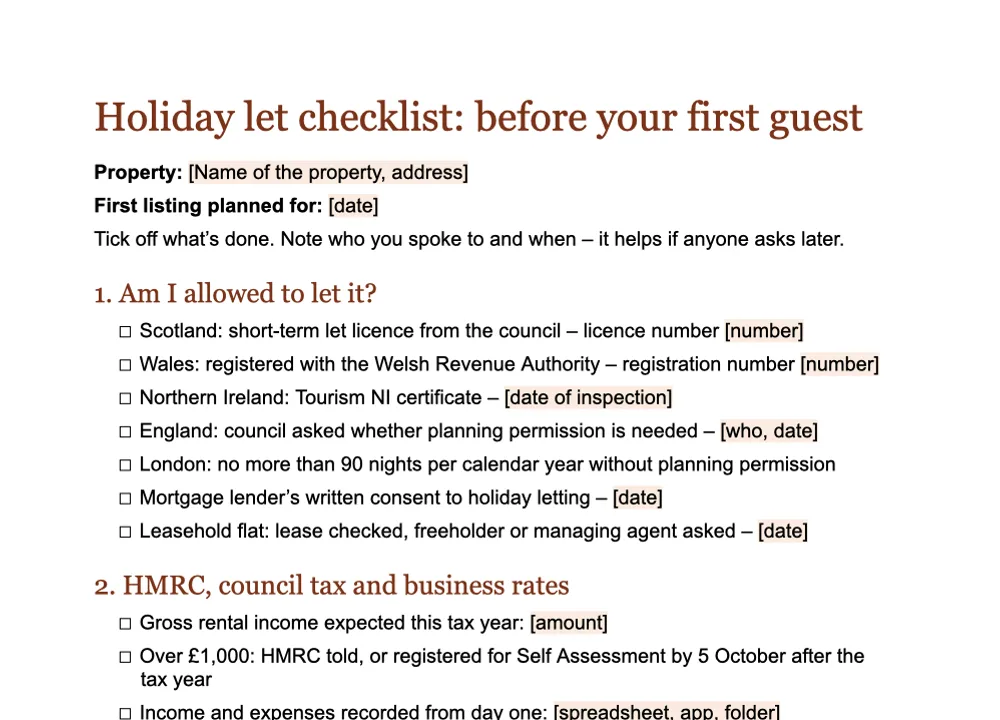
Download the holiday let checklist (Word, free)
What do you need before you start a holiday let?
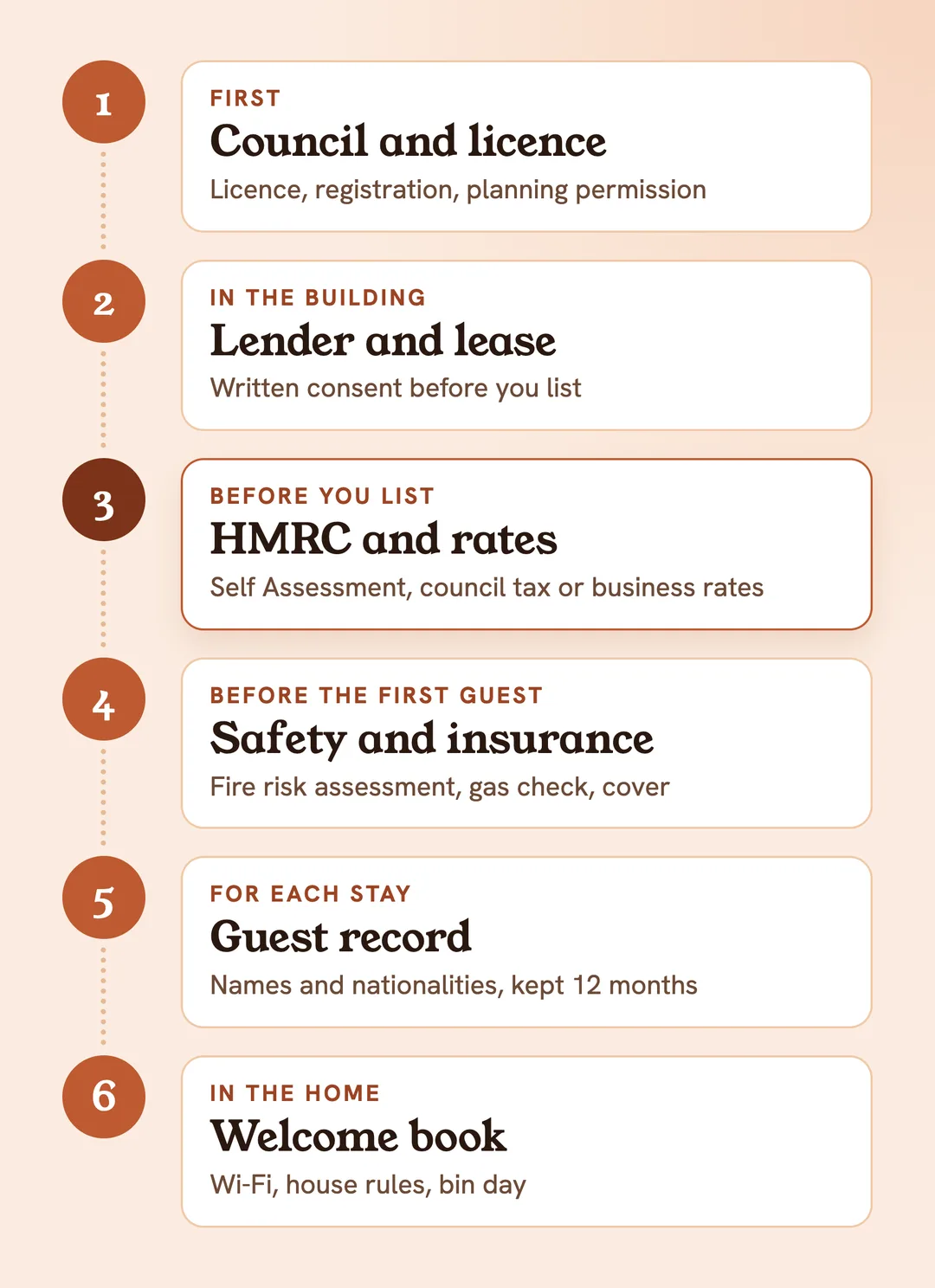
Work through it in this order. The first two steps only cost a few calls – and decide whether the rest is worth doing.
- Council and licence. Licence, registration or planning permission.
- Lender and lease. Written consent before you list.
- HMRC and rates. Self Assessment, council tax or business rates.
- Safety and insurance. Fire risk assessment, gas check, holiday let cover.
- Each stay. A record of who stayed.
- Welcome book. Wi-Fi, house rules, bin day – fewer messages for you.
Are you allowed to let the property?
Three people can say no.
The council. Scotland needs a short-term let licence, Wales a free registration from 1 October 2026, Northern Ireland a Tourism NI certificate. England’s register is not in force yet. The details are in Airbnb registration and licence rules in the UK. In England, the local planning authority decides whether you need planning permission, based on how the property is used and its impact on neighbours (GOV.UK). In London, you can let a home for up to 90 nights a calendar year without it.
Your mortgage lender. Check your mortgage terms, and ask the lender for written consent before you take paying guests.
The freeholder. In a leasehold flat, read the lease: it may restrict short lets or business use. Ask the freeholder or managing agent, and keep the answer.
Do you need to tell HMRC?
Yes, once your gross rental income passes £1,000 in a tax year – that’s the property allowance. Between £1,000 and £2,500, contact HMRC; above £2,500, register for Self Assessment by 5 October after the tax year ends (GOV.UK).
Three more things to know:
- No more furnished holiday let regime. It was abolished on 6 April 2025. Holiday let income is now taxed under the usual residential landlord rules.
- A room in your own home. The Rent a Room Scheme lets you earn up to £7,500 a year tax-free from furnished accommodation in your home (GOV.UK).
- HMRC already has the figures. Airbnb, Booking and other platforms report your income to HMRC by 31 January each year and must give you a copy (GOV.UK).
Council tax or business rates?
It depends on how many nights you let. In England, a property is valued for business rates if it was available to let for at least 140 nights in the last 12 months and actually let for at least 70 (GOV.UK). In Wales the figures are 252 and 182. If you meet the criteria, you must apply to the Valuation Office. Below them, you stay on council tax.
What safety checks does a holiday let need?
In England, the government’s list is short and specific:
- Fire. A fire risk assessment is a legal duty. For a small let – up to 10 people and two floors – follow the official guide to making small paying guest accommodation safe from fire.
- Gas. A Gas Safe registered engineer checks every gas appliance once a year. For stays under 28 days, display a copy of the record in the property (HSE).
- Electrics, EPC, TV Licence. Follow the HSE guidance on electrical safety, check whether you need an EPC, and buy a TV Licence if you provide a TV.
Scotland asks for gas, electrical and fire safety documents as part of the licence application.
What insurance do you need?
Don’t assume ordinary home insurance covers paying guests. The government says you should have dedicated holiday let insurance, public liability cover, and buildings and contents cover suitable for short-term letting. Get the cover confirmed in writing before the first booking.
What do you do for each stay?
Every guest aged 16 or over gives you their full name and nationality on arrival, and you keep the record for at least 12 months. How to do that without meeting guests is in Airbnb self check-in.
Where you have a licence or registration number, it goes in every listing.
The welcome book: the last line of the checklist
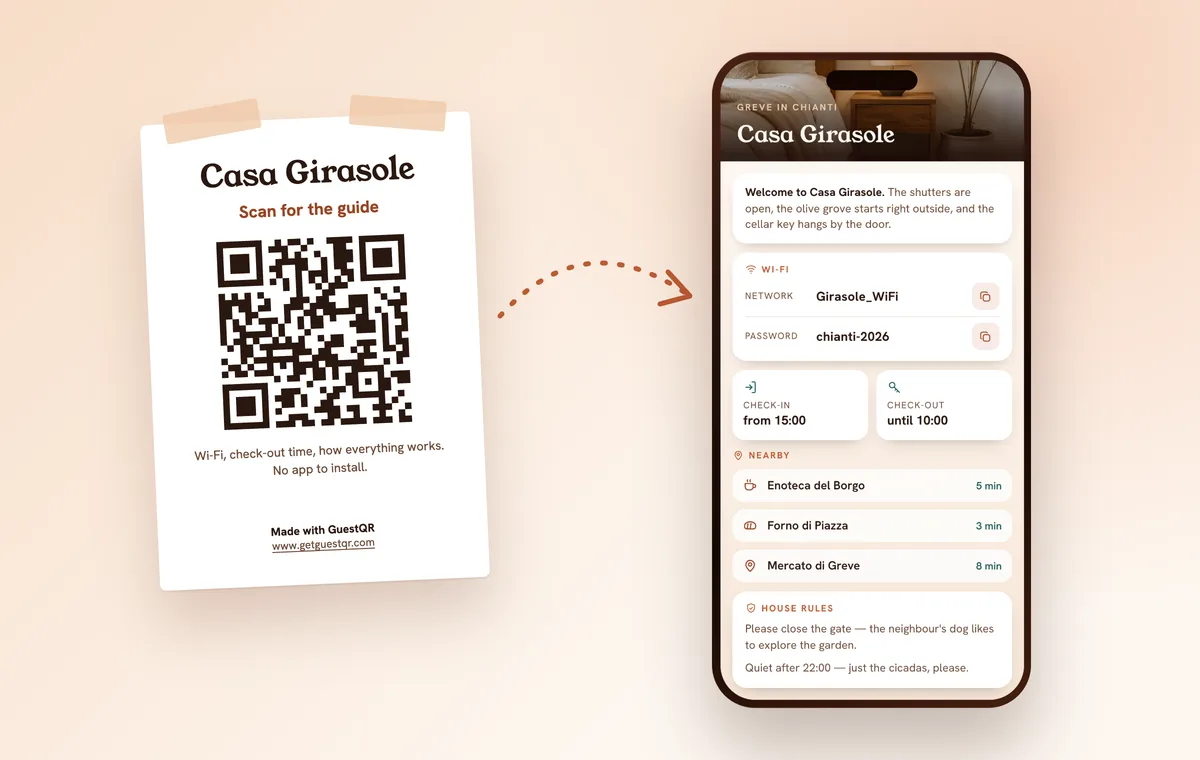
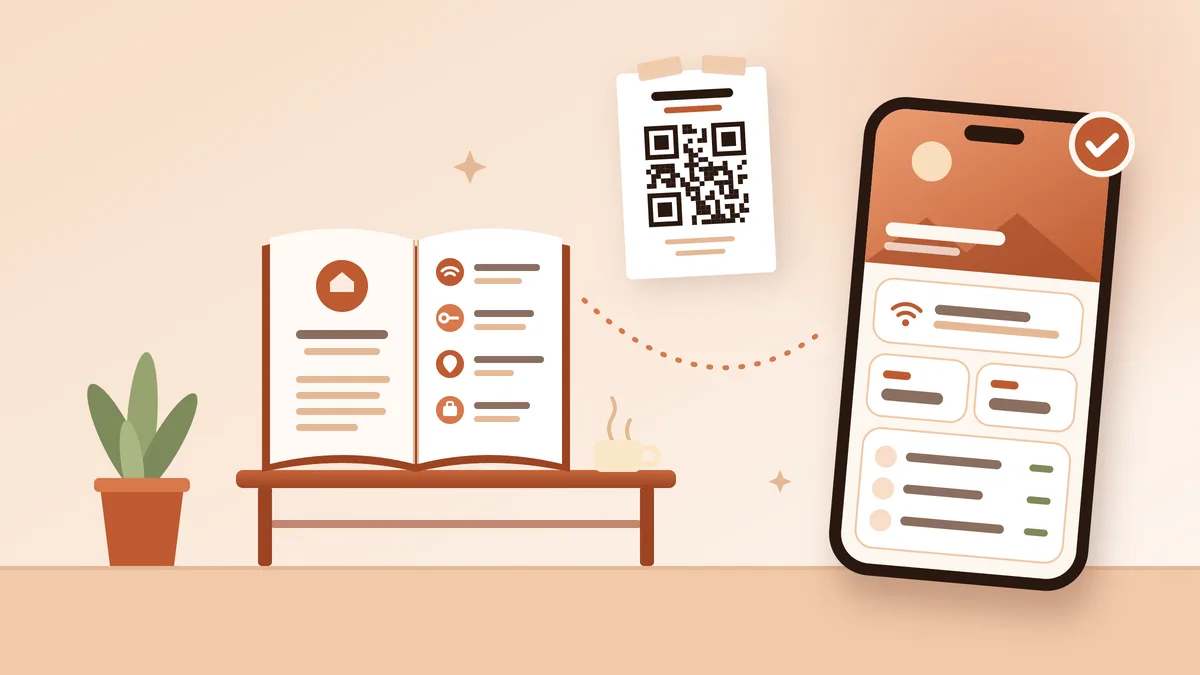
Wi-Fi, arrival, house rules, bins, fire safety, checking out, emergency numbers: all of it belongs in the welcome book. On paper, start with our Airbnb welcome book template.
With GuestQR it goes digital: paste the link to your Airbnb or Booking listing, finish the guide and print a QR poster for the wall inside the property. Guests scan the code and read everything on their phone – in their own language, one of eight, no app needed. New lockbox code or a change to bin day? You fix it in a minute.